The 6 Best ABM Landing Page Tools for 2026: Complete Comparison


Key takeaways
- Dedicated ABM landing page builders like Prismic are designed to generate account-specific pages at scale, while general tools like Unbounce and Instapage focus primarily on conversion optimization and paid campaigns.
- CRM- and enrichment-driven personalization is what separates true ABM tools from standard landing page builders; platforms like HubSpot Content Hub support this best for teams already embedded in their ecosystem.
- Website personalization tools such as Mutiny modify existing pages but are not optimized for creating net-new, one-to-one ABM landing pages.
- Enterprise ABM platforms like Folloze are best suited for multi-asset buyer journeys rather than single landing page experiences.
- Token-based personalization is no longer sufficient; the most effective ABM tools adapt headlines, use cases, and proof points, not just text fields.
- When evaluating ABM landing page tools, teams should prioritize personalization depth, scalability, brand control, and account-level measurement, rather than generic page-building features.
Generic page builders weren't built for the way ABM works now. You're collecting more first-party data than ever, enrichment platforms can fill gaps instantly, and buyers expect relevance everywhere. Yet most teams still can't deliver personalized landing pages at the scale modern ABM programs demand.
ABM landing page builders are designed to close this gap by turning CRM and firmographic data into account-specific landing pages at scale. This article explains what differentiates ABM landing page tools from generic builders, how to evaluate them, and which six platforms are most relevant for B2B teams in 2026.
How we evaluated these ABM landing page builders
Here's what we prioritized when comparing ABM landing page tools. You can use the same framework to evaluate options for your own team.
- Personalization depth and data integration: We looked at whether each tool can use firmographic data, intent signals, CRM fields, and enrichment sources to generate meaningful content variations. Token swapping doesn't count—we wanted tools that adapt messaging, use cases, and proof points based on account context.
- Speed to launch at scale: How quickly can teams go from a base page to dozens or hundreds of live variations? We assessed batch generation capabilities, template workflows, and overall time-to-publish.
- Marketing team autonomy: Can marketers create, edit, and publish pages independently? Or does every change require an engineering ticket? The best ABM tools empower marketing to move fast without waiting on dev resources.
- Brand control and review workflows: Scaling personalization introduces risk—off-brand messaging, inconsistent design, quality issues. We evaluated how tools maintain brand consistency across variations and whether they offer approval workflows and draft batches for quality control.
- Account-level tracking and attribution: ABM success depends on proving impact at the account level. We looked for personalized URLs, engagement signals per account, and integration with analytics or CRM for measuring results before revenue fully materializes.
ABM landing page builder feature comparison table
The 6 best ABM landing page builders for B2B marketing teams
Here are the top tools for creating personalized ABM landing pages, each with distinct strengths depending on your program's scale and technical resources.
1. Prismic ABM Page Builder
Best for: B2B teams scaling one-to-one or one-to-few ABM programs from tens to hundreds of accounts without adding headcount
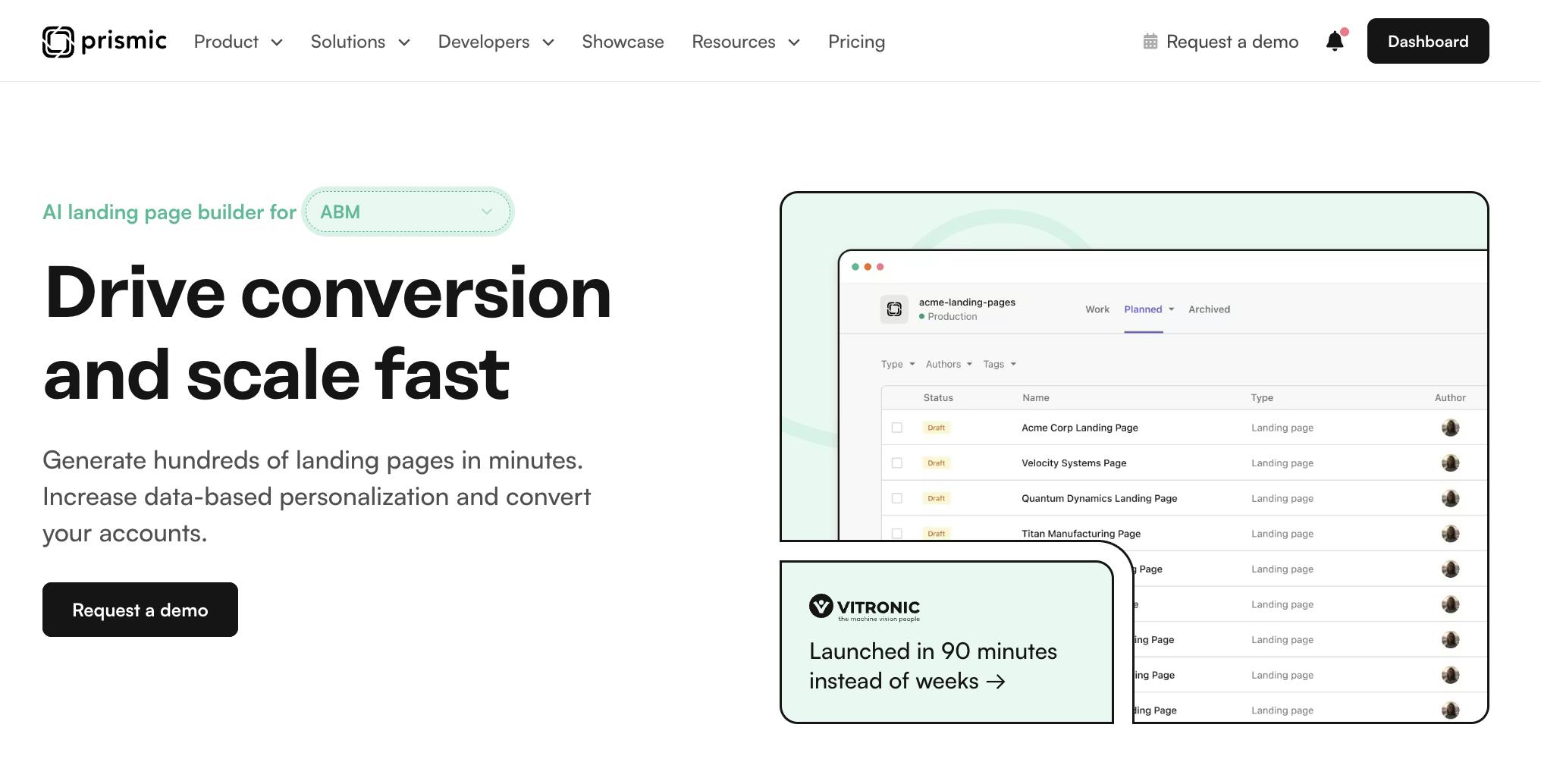
Prismic’s ABM landing page builder is purpose-built for creating account-specific landing pages at scale. Teams create one approved base page and generate tailored variations using account data from CRMs or enrichment tools.
Unlike traditional dynamic text replacement, Prismic generates narrative-level variations that adapt headlines, pain points, use cases, and proof points based on firmographic context.
Pages arrive as editable drafts in organized batches, so marketing reviews and approves before anything goes live. VITRONIC, for example, launched a 60-page personalized campaign in about 90 minutes—work that previously took weeks.
Key strength: AI-generated variations that go beyond token swapping to adapt messaging based on industry, firmographics, and likely pain points
Pros
- Account-level page generation (one page per account)
- Narrative personalization beyond token swapping
- Batch generation from a single base page
- Marketing-owned workflows with review and approval
Cons
- It is designed for campaign destinations rather than ongoing, site-wide personalization.
- Not focused on real-time CRO or traffic routing

2. Unbounce
Best for: Teams prioritizing conversion optimization and A/B testing
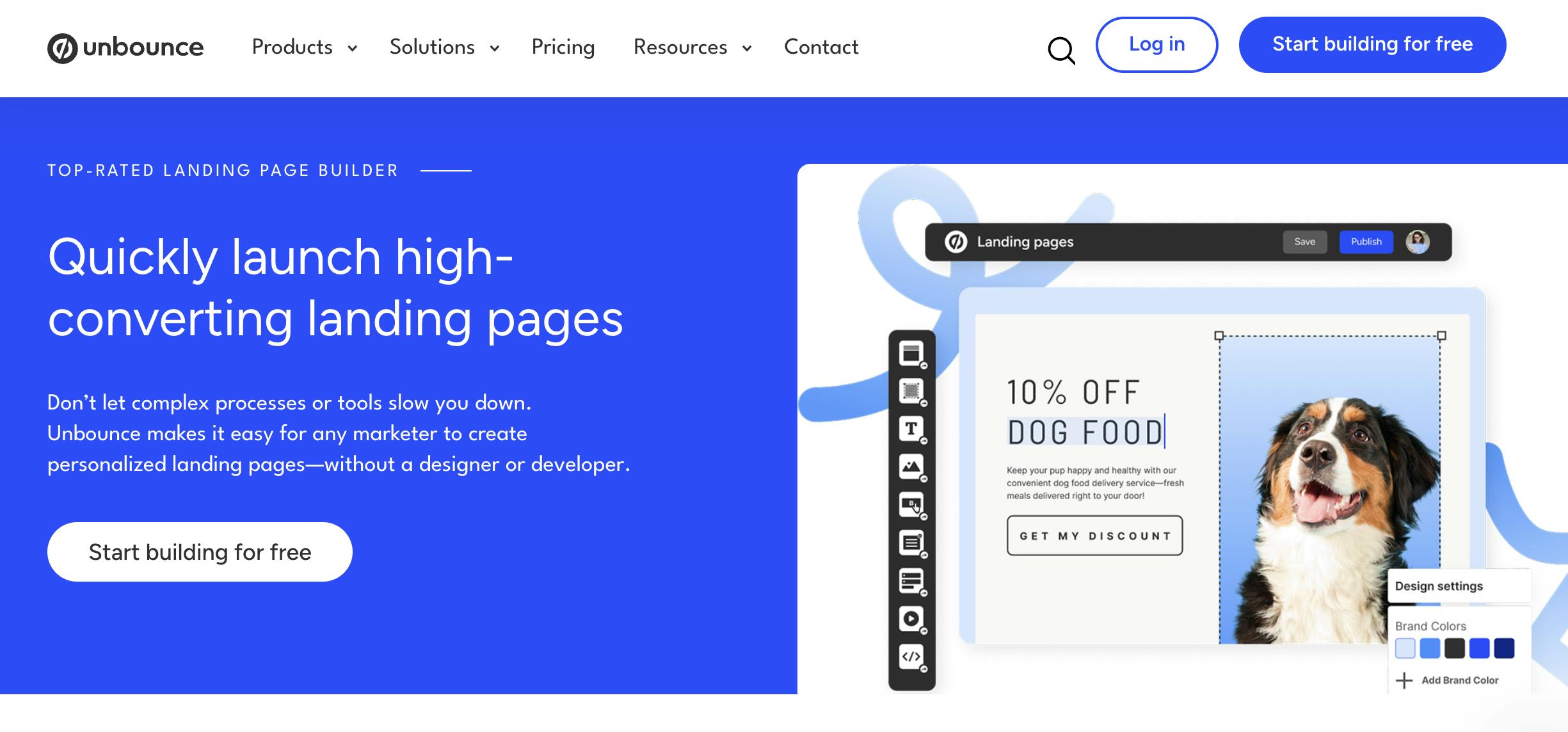
Unbounce is a well-established landing page builder with Smart Traffic AI that automatically routes visitors to the highest-converting variant. The drag-and-drop editor makes page creation straightforward, and A/B testing capabilities are robust.
Key strength: AI-powered traffic routing to highest-converting variants
Pros
- Drag-and-drop page builder
- Built-in A/B testing and optimization
- Fast publishing without developers
Cons
- No native account-level ABM model
- Personalization is session-based rather than account-based
- Managing many account-specific pages is manual
Want to see how account-level landing pages work in practice?
👋 Prismic’s ABM landing page builder is designed for teams scaling one-to-one ABM without increasing production overhead.
3. Instapage
Best for: Larger teams running paid campaigns alongside ABM programs
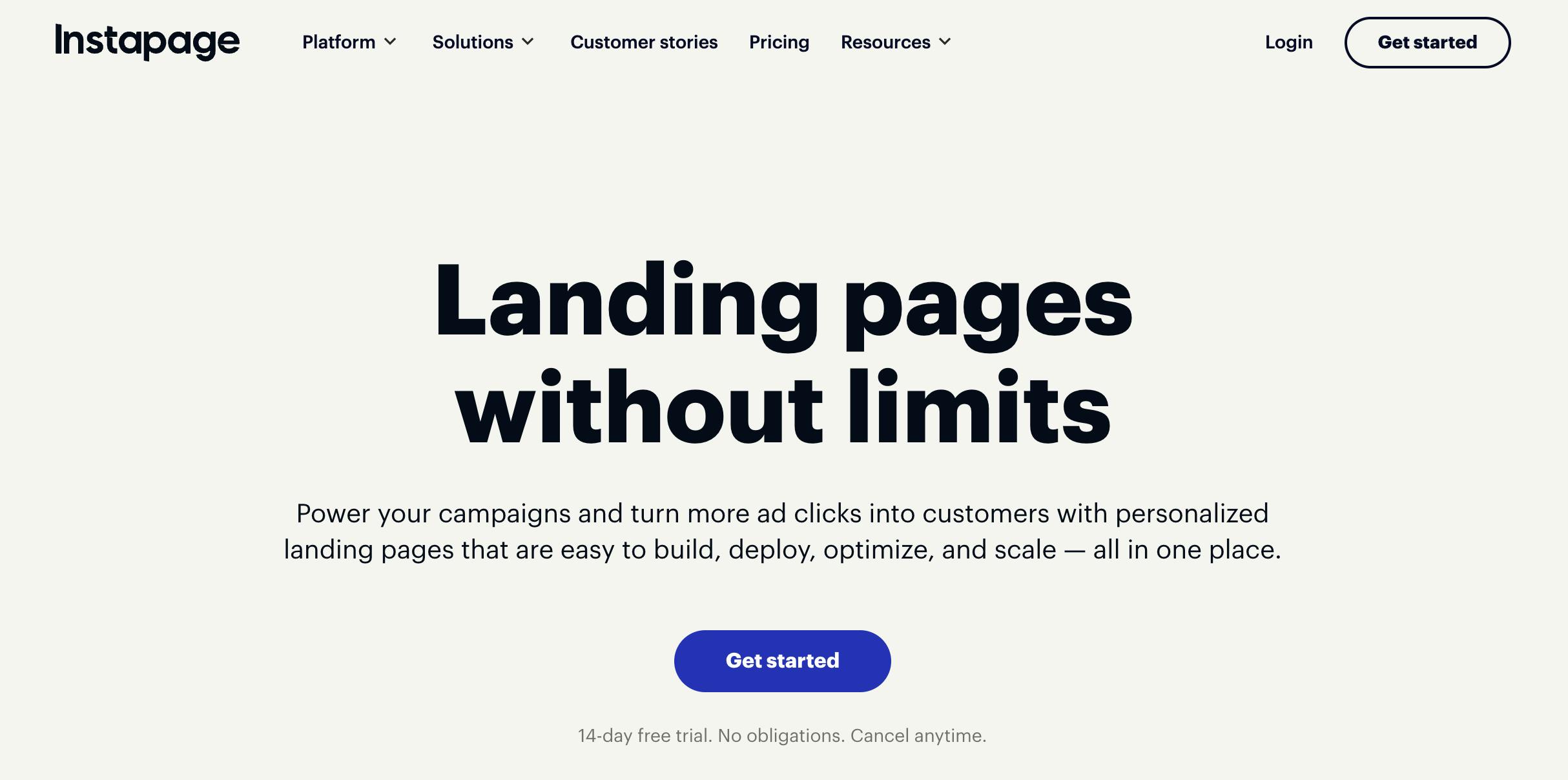
Instapage positions itself as an enterprise-grade page builder with AdMap for ad-to-page alignment and strong collaboration features. Personalization capabilities tie to UTM parameters and audience segments, making it effective for paid campaign alignment.
Key strength: Dynamic text replacement and audience-based personalization
Pros
- Strong collaboration and approval workflows
- Ad-to-page alignment for paid campaigns
- Enterprise governance features
Cons
- Segment-based rather than account-level personalization
- Limited narrative adaptation
- Higher cost at advanced tiers
4. Hubspot Content Hub
Best for: teams already invested in HubSpot
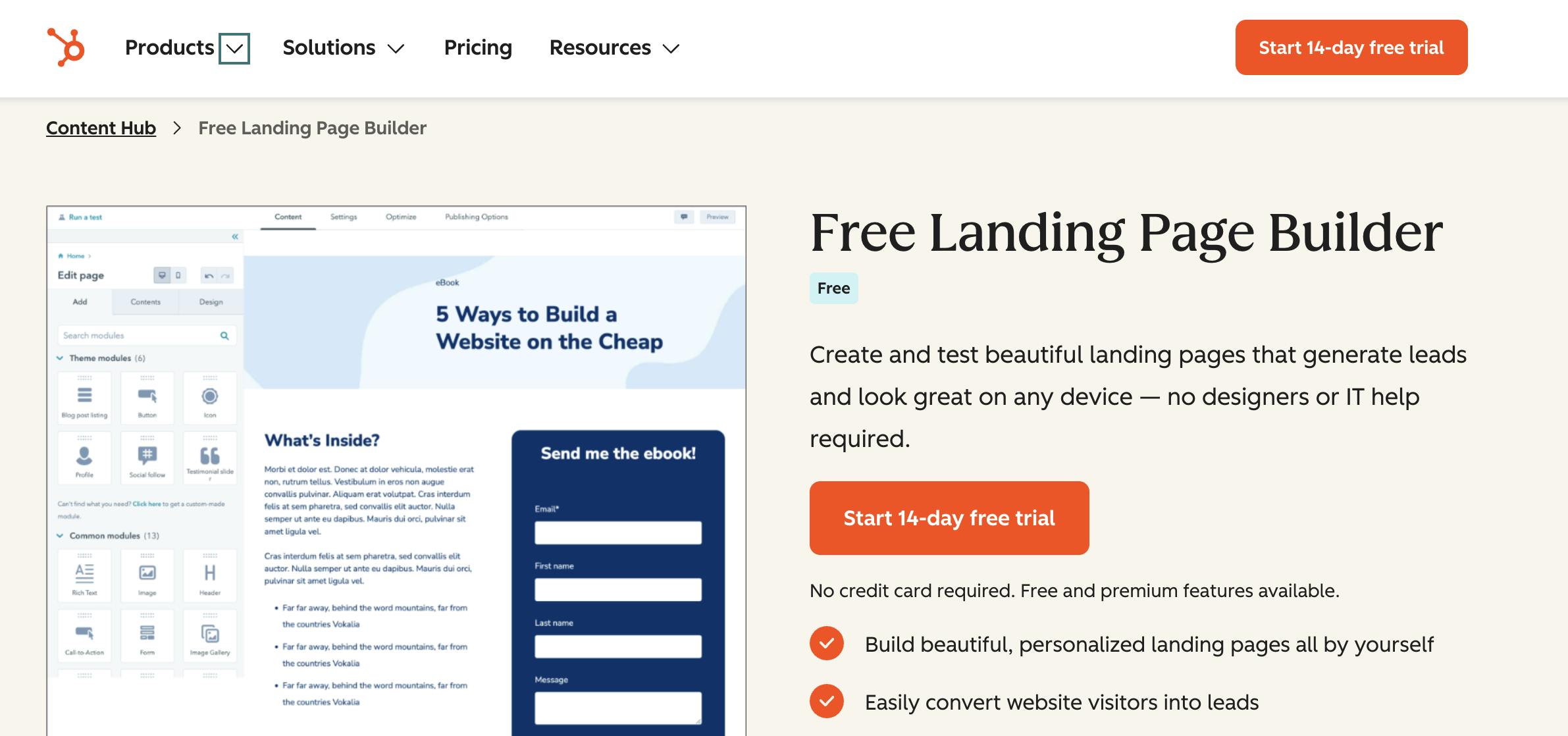
HubSpot's landing page builder lives within the broader HubSpot ecosystem, offering native CRM integration. Smart content features personalize based on contact properties and lifecycle stage, which works well for teams already invested in HubSpot.
Pros
- Native CRM integration
- Smart content rules
- Unified analytics
Cons
- Limited for anonymous ABM traffic
- Account-level personalization is constrained
- Scaling multiple landing page variations requires manual setup
5. Mutiny
Best for: Teams wanting to personalize existing website pages without rebuilding them
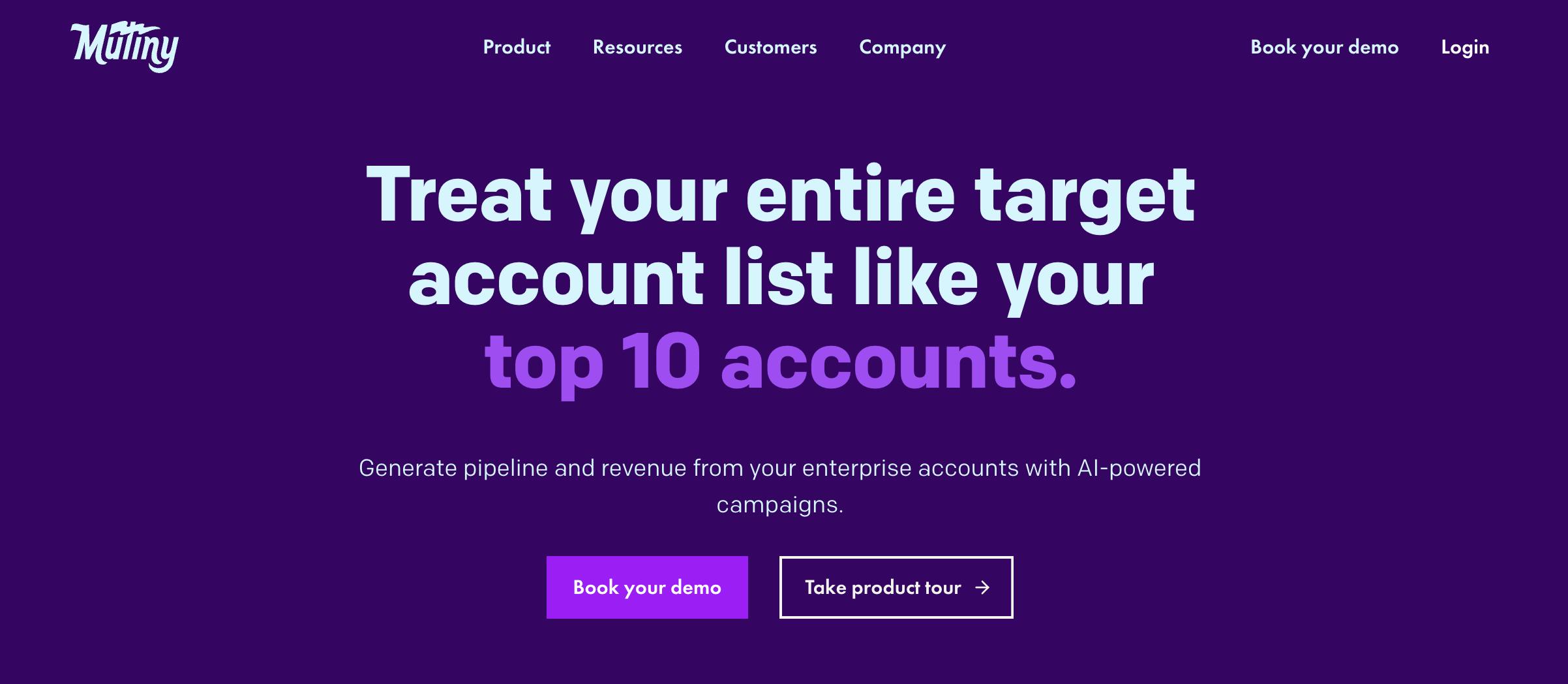
Mutiny is a website personalization platform that modifies existing pages based on visitor attributes. Rather than building new pages, it overlays personalized content using firmographic and intent data - useful for teams wanting to personalize without rebuilding.
Key strength: No-code personalization overlays using firmographic and intent data
Pros
- No-code personalization
- Works on existing pages
- Firmographic and intent targeting
Cons
- Not designed for net-new ABM landing pages
- Limited ability to restructure full narratives
- Requires sufficient traffic
6. Folloze
Best for: Enterprise ABM teams creating multi-asset buyer experiences
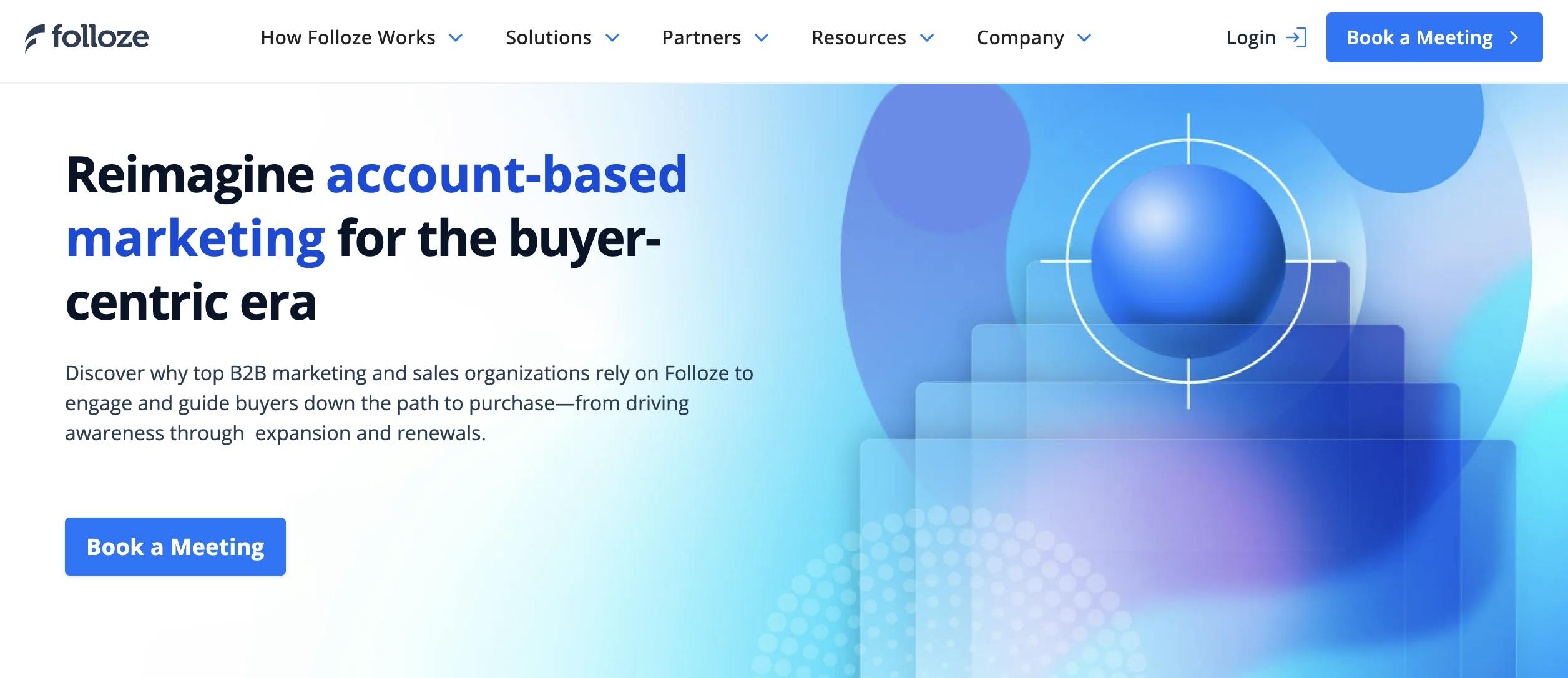
Folloze is an ABM content experience platform focused on personalized buyer journeys rather than single landing pages. It creates content boards with multi-touch engagement tracking across the buying journey.
Key strength: Personalized content boards with engagement tracking across the buying journey
Pros
- Multi-asset personalization
- Account-level engagement tracking
- Designed for complex ABM motions
Cons
- More complex than a landing page builder
- Higher setup overhead
- Overkill for simple campaigns
How to choose the right ABM landing page builder for your team
The right tool depends on your ABM program's scale, technical resources, and personalization goals. Here's how to think through the decision.
Match the tool to your ABM program scale
Teams targeting a handful of accounts may manage with manual approaches or segment-level personalization. But if you're scaling to dozens or hundreds of accounts, you'll want tools that generate variations efficiently without multiplying production work.
A tool like Prismic's batch generation is designed for exactly this scenario—turning one base page into many variations without requiring proportional effort.
Assess your technical resources and integrations
Consider whether you have developer support available or if you're looking for marketing-only workflows. Some tools require engineering involvement for setup and customization, while others empower marketers to work independently from day one.
Also think about your existing stack. If you're already deep in HubSpot, their native integration might outweigh other considerations. If you're using enrichment tools like Clay or Clearbit, check which platforms offer direct data connections.
Prioritize personalization depth over surface-level customization
Look beyond token swapping when evaluating tools. Meaningful ABM personalization adapts the narrative—headlines, pain points, use cases, proof points—not just inserts a company name.
Ask vendors to show you examples of how their personalization actually works. The difference between "Hi {Company Name}" and genuinely tailored messaging is significant.
FAQs
What is an ABM landing page builder?
An ABM landing page builder is a tool that creates personalized landing pages for specific target accounts—not just audience segments, but individual companies. The key difference from a standard landing page builder? ABM tools pull in firmographic data, CRM fields, and enrichment information to tailor messaging at the account level. So instead of one generic page for everyone, you get dozens or hundreds of variations that speak directly to each prospect's industry, company size, and likely pain points.
The core capabilities that set ABM landing page builders apart include:
- Account-level personalization: Headlines, proof points, and use cases adapt to each target company's context
- Data integration: CRM fields, firmographics, and enrichment data from tools like Clay or Clearbit flow directly into page content
- Scalable variation generation: One base page becomes many tailored versions without manual rebuilding
- Engagement tracking: Personalized URLs and account-level analytics show which companies are engaging
Why do B2B teams need dedicated ABM landing page tools in 2026?
Account data never reaches landing page content
Here's a frustrating pattern: your CRM and enrichment tools contain rich account data—company size, industry, tech stack, recent funding rounds—but that information stays siloed. It never makes it onto the landing page where your prospect actually lands.
The result is a generic experience that ignores everything you know about the account. Your outreach email mentioned their specific challenge, your ad spoke to their industry, and then they click through to a page that could be for anyone.
Manual page creation cannot keep pace with campaigns
Creating a personalized landing page typically requires writing, design, and development resources. For most teams, that means tickets, queues, and delays. By the time the page goes live, the buying window may have closed.
Sales loses momentum because the destination doesn't match the promise of your outreach. The prospect clicked expecting relevance and got a template.
Token-based personalization feels generic to buyers
Token swapping—inserting a company name or industry into a template—was once considered personalization. Not anymore. Buyers can spot find-and-replace tactics immediately, and it signals that you haven't actually thought about their specific challenges.
Meaningful personalization adapts the narrative: the headline, the pain points addressed, the use cases highlighted, the proof points selected. Swapping nouns isn't enough.
Which ABM landing page builder would you recommend for most B2B Account-based marketing programs and why?
For most B2B account-based marketing programs, Prismic is the strongest overall choice because it is purpose-built for creating and managing account-specific landing pages at scale. Its base-page and batch-generation model allows teams to produce one-to-one pages efficiently while maintaining brand consistency and review control.
This makes it especially well suited for ABM programs targeting dozens or hundreds of accounts, where manual page creation or segment-based personalization quickly becomes a bottleneck.
How much does an ABM landing page builder cost?
Pricing varies widely based on features, page volume, and team size. Most tools offer tiered plans ranging from self-serve options starting around $100/month to enterprise contracts with custom pricing based on usage and support requirements.
Can I create ABM landing pages without developers?
Yes, most modern ABM landing page builders are designed for marketing teams to create, edit, and publish pages independently. The best tools offer visual editors and batch workflows that don't require engineering support or code changes.
What is the difference between website personalization and ABM landing pages?
Website personalization modifies existing site content based on visitor attributes—overlaying different headlines or CTAs for different segments. ABM landing pages are dedicated pages built specifically for target accounts with tailored messaging and unique URLs for tracking.
How many landing page variations do I need for an ABM program?
The number depends on your target account list and personalization approach. Some teams create one variation per account for their highest-value targets, while others group accounts by industry or segment for efficiency. Tools that generate variations at scale make the one-to-one approach more practical.
How do I connect CRM and enrichment data to ABM landing pages?
Most ABM landing page tools offer integrations with CRMs like Salesforce and HubSpot, plus enrichment platforms like Clay and Clearbit. You can typically import account data via CSV upload or direct API connections, then map fields to personalization variables in your templates.